Tuesday, October 26, 2021


25 Years of Wonder in Warner Park

October 27, 2021                                

Shared by Kim Bailey

Naturalist 

Twenty-five years ago I began a life-changing career as a naturalist at Warner Park. It was truly a dream come true to find work that allowed me to study, protect and educate others about nature, since it is my avocation as well. Over these 25 years I have worked with some of the best educators in the field, led thousands of curious students on field trips, and met countless people who are drawn to the beauty and wonder of Warner Park. 


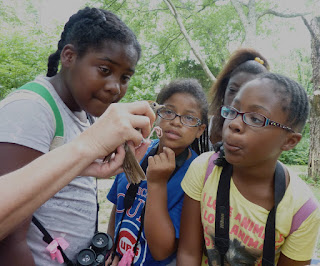
Two of my favorite aspects of my job: kids and insects! These students were enthralled to see a cave cricket up close.

To illustrate the park’s impact on my life, I’ll share a few of my favorite stories.

In the spring of 2003 I led a field trip for Spring Hill Elementary. When we came to the small pond on campus, I mentioned to the students how lucky they were to see the pond because soon it would be filled in to make way for a sidewalk. We proceeded to catch leeches and snails and search for frogs among the lily pads. The children were sad to hear that this life-filled habitat would soon be gone.

Within a week of their visit, a package of letters arrived. “Dear (the powers that be at Warner Park), Please save the little pond! You wouldn’t want to kill the snails, leeches, frogs, lily pads and mosquito larvae. When I come back I want to hear the frogs croak.” (Clearly my message of inter-connectedness had been taken to heart!) Other letters took a more challenging tone. “If you are a good person why would you put a sidewalk through the pond?”  and “How would you feel if the snails and leeches destroyed your habitat?”


An emergency meeting was convened to discuss the “radical protest” and the pond was rerouted.  After all, how can you deny earnest third graders who are taking their first steps as environmental stewards? 


There really was an "emergency" meeting!

The sidewalk would now hug the barn, but alas, the redbud would have to come down.  I conveyed the news to the teacher. Her class had saved the pond! But now the redbud was in danger. 

A week passed. A new packet of letters arrived. “Please oh please, don’t cut the redbud down!” It was a lesson in the impassioned logic of children not bogged down by adult practicalities. If a pond could be saved, surely a redbud could also be rescued! One child argued, “The redbud tree gives animals homes and us oxygen. It’s your choice, make it the right one.” Another wrote, “Without a redbud, what would spring do?” 


If you have any doubt as to the power of children’s voices, stop by and visit the little pond and redbud tree still thriving near the barn. 


~~~

Some of my favorite memories involve the community center kids attending Pen Pals camp.  Many of them began a night hike with fear and trepidation. I remember a new-moon night when we began our walk in pitch darkness. We formed a snake-like chain as we took tentative steps into the unknown. The child behind me had an iron grip on my arm, who was gripped by the next child who was gripped by the next. And so we inched along the trail like a massive caterpillar, as I felt our way forward with my foot, reaching out with my hand to make sure I didn’t smack into a tree. I don’t know why it felt important to do this hike without flashlights, but I wanted to give them a sense of accomplishment, especially given the fact that most had never stepped foot in a forest, much less at night!  The voices behind me held a mixture of fear and excitement but we made it all the way up to the road. The pride in their voices was unmistakable as we settled down to talk about nocturnal animals and listen for owls.

As we emerged from the forest and headed back to the lodge, one of the girls who had been completely terrified at the hike’s beginning said “It’s over already? I’m not ready to go back!” This pre-teen now knew how to imitate a barred owl and find spider eyes with a flashlight. Her words were music to my ears!


Spending time with Pen Pals Campers was always a highlight of summer. 
Photo by Sandy Bivens.

~~~

A veteran suffering from PTSD came with a group for a nature center tour. He was absolutely terrified of snakes. When he heard there was a snake at the pond, he initially refused to go see it. After assuring him we would keep a safe distance, he finally agreed to cross the rocks. A 6-year old boy ran up and began excitedly telling him that it was a midland watersnake and proceeded to tell him why it was so cool! As the man listened, his tensed body slowly relaxed and he drew a little closer, beginning to watch the snake with interest. At the end of the program he pulled me aside and said with tears in his eyes that the experience had transformed his life. After witnessing this young boy’s enthusiasm for snakes, he had been able to release much of his fear. He was now eager to teach his grandkids to be curious, not afraid, of snakes.

Observing a Midland Water Snake sunning by the pond had a huge impact on a park visitor, thanks to a young snake enthusiast.

~~~

Ever wonder how the Burch Reserve’s Pickerel Pond got its name? It involves a mystery sound heard one night while Melissa Donahue, her daughter Casey and I were conducting amphibian research in the park. We call it “froglogging” when we go into the park at night and listen for frogs calling during breeding season. As we climbed the hill toward the large pond we heard an odd sound that was reminiscent of a low snore. 

Memories of frogs whose calls sounded like snoring came to mind  - maybe a Pickerel or Crawfish Frog? It turned out to be a Pickerel frog, which was not only a park record but a county record. The news gained attention in the press and Channel 4 did a story -even the AP picked it up!


It is always exciting to find a new species in the park. Pickerel frogs soon showed up at the Nature Center pond as well.

~~~

Another night while froglogging, I heard a splash as I stood by Willow Pond. I shone my flashlight toward the water and saw a young squirrel crawling out of the water. It made a beeline for me and before I could react, it climbed my jeans and perched on my shoulder! The little guy had fallen from a willow that hung over the pond. I felt I had no choice but to take it home for the night. When I returned the next morning, we could find no sign of a nest or any other squirrels. So my new buddy went to Walden's Puddle until he was big enough to be released.

                    This young squirrel had a happy ending after falling into Willow Pond at night.  
Photo by Bert Bailey       

~~~

One of the bravest things I have ever done happened one beautiful day when someone noticed a swarm of honeybees on the dogwood tree outside the library. The staff gathered in awe and excitement. Then it was decided that Bob Parrish, the most experienced beekeeper, would stick his hand in the ball of bees. Say what?! He insisted that bees aren’t aggressive when they swarm and if you are calm you can safely do this. Vera Roberts, the other beekeeper at the time, followed suit. Suddenly I HAD to do it! I remember climbing the ladder with my heart pounding in my chest and sticking my hand in that pulsating mass of bees. Bees were buzzing all around my head and I felt heat in the center of the ball from all that throbbing. I alternated between exhilaration and terror in the short time (surely an hour..) that I was immersed in bees!


One of my most thrilling experiences at Warner Park involved thousands of bees!
Photo by Deb Beasley

~~~

One of the biggest gifts of my work was Time, as year after year I had the opportunity to witness the Park’s seasonal rhythms unfold. The knowledge that the first bloodroot blooms in early March and a yellow-bellied sapsucker’s odd “mew” is heard in winter has seeped into my bones over the years. 

This photo from March 2015 shows the joy I feel when I see bloodroot!

This awareness of nature's cycles has enriched my life and contributes to my anticipation of each coming season. I no longer dislike winter’s cold and dreary days – that’s when a tree’s “architecture” is revealed. The heat and humidity of summer not only brings out the mosquitoes, but the steady drum of cicadas. Spring wildflowers pop up each year like old friends and autumn's luminous display of color never ceases to inspire me. I have learned that the Park offers something new – dare I say magical – every single day, when you are paying attention.


  During a bioblitz of the Hill Forest, my team came across the usually nocturnal flying squirrel at the base of a tree!


This red bat looked like a kiwi hanging in a tulip poplar along the Warner Woods trail. Closer inspection (without touching the bat), revealed it was one of our resident bat species who prefers roosting in trees, not caves.


I’ve seen many other fascinating behaviors and sights in the park.  Encountering animals undergoing various stages of their life cycle is always a thrill. 


This male Eastern newt undulated his fin-like tail over a female in hopes of wooing her.


One day I was witness to the very quick mating behavior of Indigo buntings from the road above Long Hollow. The brevity made getting a focused shot impossible.


This pair of silvery checkerspots were seen mating in March near the library. The butterfly counters among us were grateful they sat still long enough to see their white "spots"!


 A box turtle found the perfect spot in front of the nature center to lay her eggs.
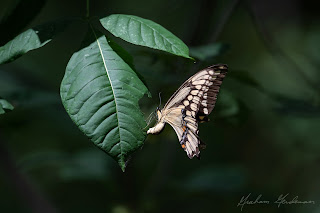


Just last month a giant swallowtail floated ethereally through the campus and hovered over a hoptree.  
Graham Gerdeman captured the moment she laid an egg.

This protective mother salamander was found wrapped around her eggs in the creek. 
Photo by Deb Beazley


A skink mother incubates her eggs and stays with the young for a few days until they disperse.

 A crayfish carries its eggs tucked neatly under its tail.

    A few years ago the staff discovered leeches in the nature center pond carrying their young underneath them! Who knew leeches provided childcare?!


Assassin bug nymphs hatching from an elaborate egg cluster were an exciting find in the woods behind the wildflower garden.

Mockingbird nestlings hidden deep within a vine were a treat to find.

It's always fun to find a tadpole in mid-metamorphosis!

Is there anything cuter than a tiny snapping turtle?!

Occasionally we’d find a young bat that didn’t make it back to its roost. We always left it alone so that it could find its way home after dark. 


Of course, not all sightings were warm and fuzzy! Competition and predation can be seen in the park as well.


The search is on for enough leaves to feed this tiny army of tussock caterpillars!


This tussock caterpillar (top) has done well, but must now vie with a monarch caterpillar for the same milkweed leaf!


Remember those tiny leeches? They grow up to feed on turtle blood. At least 8 leeches were attached to the skin around this turtle's throat.

 It’s not easy being a large caterpillar. Turns out there are a number of insects that will lay their eggs on you. This sphinx moth caterpillar is the victim of a parasitoid wasp.

It’s a bug eat bug world out there. Robber flies are ferocious hunters and bees are often unlucky prey.


Vaughn Creek dried up one summer, leaving a small pool of water. Watch as this Midland Watersnake  hunts for trapped fish and insects, occasionally swimming with his mouth open.

I would be remiss if I didn’t mention the impact of working at a nature center that studies and bands birds. When I arrived on the job I was into mammals, insects and trees, but now I am absolutely crazy about birds – just ask my family! I went from not knowing a chickadee from a titmouse, to banding them along with many other species. The expertise and patience of the banders was invaluable.


I have learned so much from the banders at WPNC. 


Diana McLusky, Kathy Shaw, Sandy Bivens and Susan Bradfield were my first mentors in all things Bird!


Some spectacular birds have shown up on bird banding days, like this molting scarlet tanager.


What a thrill to see these birds up close! 
Photo by Sandy Bivens


Warblers are my favorite type of bird, and this male Common yellowthroat is a beauty! 
Photo by Alan Plummer


When a Midland Water Snake was found in the net,  I thought the tail was the better end to hold, but changed my mind after the snake excreted a foul-smelling musk all over my hands! 
Photo by Sandy Bivens

My stories could go on and on. But suffice it to say that I have known countless moments of wonder and discovery over the last 25 years. I am deeply grateful to have been a student of Nature herself, but I can't forget all the people that have brought joy my way.

I am grateful...

For all of the beautiful, inquisitive children that took to nature like a duck to water…


For volunteers that lit up my days with their smiles…

Cheryl Brummal, Sandra Smith, Bev Well, Ro Shulenberger,  are just a few of the volunteers that have brightened a work day.

            Kaaren May and Linda Cohen are two of the volunteers that made field trips flow smoothly.


For home school families whose children grew up in front of my eyes…


A shout out to all the 7-8 year olds I explored with over the years!

 Liz, Wynonna and Cody Koontz, Amy, Benjamin and Hannah Pardo and Lauren and Della Hoffman are some of the families that have made time at work special.


For fellow educators throughout Middle Tennessee that helped with special events and programming...

Steve Murphree's station at Insects of the Night was always a hit.

 or shared their students with us...


Rick Stanley of Hume-Fogg was one of the exceptional teachers whose students participated in our programs.

For those high school students that delved into ecosystems, water quality, forest ecology and more...


MLK students taking measurements for a Succession lab.


Getting students of all ages outside is a good thing!


For the opportunities to work with other educators throughout the state...

I was honored to co-chair the Tennessee Environmental Literacy Plan Task Force. The plan was accepted by TDEC in 2012 and still awaits adoption.


For the many seasonals that brightened up summers.


 Permanent and seasonal staff always bond over river programs, owl prowls and Insects of the Night. Each summer "class" was special.


Above all, I am grateful for the opportunity to work with each staff person that has graced the nature center during my tenure. Although nature was clearly the star over the years, my life is inextricably linked with my co-workers. I could write a book about what they have taught me. We have become the ad hoc kind of family you see on tv; all of us unique, all of us bonded by love of a park and its mission to educate, conserve and recreate responsibly. Oh the stories we can tell! Like the one about a certain staff retreat that began with a casserole dish of bean dip and ended with a box of bean dip "chocolates" in a valentines box gifted anonymously in a mailbox… just one of many jokes we played on each other! 

The “Bean Dip” staff trip to Reelfoot Lake

We have shared laughter and wonder, pondered questions about nature and the world, celebrated the good times and supported each other through the hard times, and come out the better because of it. Thank you doesn’t begin to reveal the depth of my gratitude. 


 It was impossible to find a group photo with every staff person but if you aren't in here, don't think you are forgotten.  Thank you friends!


A quote hangs on my bulletin board: “How we spend our days is, of course, how we spend our life.” 

It’s a reminder that our daily choices add up. In a flash, years go by. 


How lucky am I that so many of my days were spent with such dedicated people in this most beautiful of places, Warner Park.


~Kim Bailey retired in September after 25 years as a Naturalist at Warner Park Nature Center. 


All photos by Kim Bailey except staff photos from Warner Park Archives or where noted.


Tuesday, October 12, 2021

Invite happiness into your backyard with bird feeders

Invite happiness into your backyard with bird feeders

October 12, 2021

Shared by Laura Cook

Bird Research Coordinator

Birds make us happy!  

While some of us have known this for a long time, science agrees. Recent studies link birds with happiness and boosting our sense of well-being.  


Yellow-throated Warbler - Photo by Alan Plumber

Feeding birds adds joy to your life and you can also help some birds by supplementing their food. Cornell University analyzed 30-years of Project FeederWatch data and found bird feeders do benefit some bird species such as Northern Cardinals. Warner Park Nature Center has participated in Project FeederWatch for 25 years! 


FeederWatch Volunteer - Photo by Sandy Bivens


Please be a good host.

The most important aspect of putting out bird feeders is to keep the feeders clean. Bird feeders and the debris below the feeders must be cleaned regularly. This can help prevent the spread of diseases such as conjunctivitis and Salmonella which was quite prevalent during last winter’s irruption year when we had so many Pine Siskins visit us. 


Pine Siskin - Photo by Charlie Curry

This summer, an unknown illness killed numerous birds in the Mid-Atlantic region (no confirmed deaths in Tennessee) – this just emphasizes the importance of keeping your feeders and the area beneath the feeders clean. 


How to clean feeders

- Hummingbird feeders should be cleaned and refilled several times a week during our warm summers. You should clean feeders regularly with warm water and some small scrub tools to get those hard-to-reach spots. 


Ruby-throated Hummingbird - Photo by Charlie Curry

- Given the recent unknown illness this summer, the Tennessee Wildlife Resources Agency recommends seed feeders should be cleaned once per week. I disassemble my bird feeders first and then use a large bucket with a solution of 1:9 water:bleach solution and scrub away any dirt and debris.  I then let them air dry before filling the feeders up with seeds. 

- Additionally, you should remove the debris and seed husks from below the feeders as this an area of high disease transmission. I use a small shovel to do this and dispose of the waste in a garbage bag.

-      Bird baths should also be cleaned regularly.  I give mine a quick scrub and hose mine daily.  This daily cleaning makes it quick and easy to clean, but the birds in my yard seem to know when I have added fresh water and come down right away for a drink or bath.


Types of feeders & seeds

Given the importance of regularly cleaning feeders, I plan to have just a few bird feeders placed strategically in my yard so I can view them easily. Here are some of my favorites: 


Red-bellied Woodpecker - Photo by Charlie Curry

- Seed feeders: I like black oil sunflower seeds that are whole, husked, or cracked in squirrel-proof tube feeders or on a pole and baffle system.

- Suet feeders: While Red-bellied and Downy Woodpeckers love my suet feeders, I am always surprised at the variety of birds that use these feeders. I hang one in the front and back yard at my house. I like to mix up the types of suet (peanut, berry, etc) to see which bird prefer which types of suet. 

- Thistle (Nyger) feeders: American Goldfinches love these seeds. Whether you use a fine mesh ‘sock’ or metal tube, for me the key is to only put a small amount of thistle seed in at a time. If the seed get wets, it can quickly spoil. Cracked sunflower seeds can also be used in these feeders. 

- Hummingbird feeders: While I put out 6-8 hummingbird feeders during peak migration from early July through mid/late September, I also leave up 1 hummingbird feeder throughout the winter in hopes of getting one of our wintering hummingbirds. Personally, I use saucer feeders because they are easier for me to keep clean. But many are convinced hummingbirds prefer inverted saucers. Either way – keep them clean and do not use red dye just a simple 1:4 sugar: water solution. It’s also nice to use an ant trap just above the feeder - they keep ants from getting inside your feeder and many birds such as American Goldfinches and Carolina Chickadees seem to prefer drinking from these.


Ruby-Throated Hummingbird and American Gold Finch - Photo by Charlie Curry

A note about squirrels

Squirrels are amazing creatures and always seem to find a way to get to the food in your feeders! 


Squirrel on Feeder - Charlie Curry 

- Place the feeder on a tall shepherd’s hook that is at least 5’ off the ground and 8’ from a tree or fence where they can jump – this may deter them.

- Attach a squirrel baffle to the shepherd’s hook below the feeder. 


Be an even better host

Inviting these beautiful animals into our yard is a gift. In addition to having clean feeders, you can do even more by following these simple tips to help birds:  

- Provide a water source such as a bird bath

- Plant native trees, shrubs, and annuals that can provide food and shelter

- Ensure your windows are bird friendly to avoid deadly window strikes

- Keep your cats indoors or in a catio. 


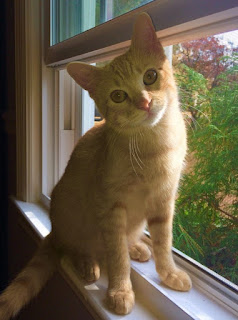
My cat, Cooper, is a happy indoor cat - Photo by Laura Cook

Get inspired at the Sandy Bivens Bird Garden at the Warner Park Nature Center.


Sandy Bivens Bird Garden - Photo by Laura Cook

Thanks to a generous donation, Warner Park Nature Center has installed a beautiful garden designed for birds. We use native plants, a beautiful water feature, bird feeders, and have bird-friendly window treatments.


The BIRD Program is funded by Friends of Warner Parks, in collaboration with Warner Park Nature Center and Nashville Metro Parks and Recreation. This year marks the 40th year of the WPNC Bird Banding Station thanks to our dedicated volunteers, staff, and partners!  

Please support our legacy bird research and public engagement programs with a donation, become a member, and volunteer with Warner Parks. #ProtectTheBirds #ProtectWarnerParks.

Tuesday, September 21, 2021

 Fall for Warner Parks

September 21, 2021

Shared By Melissa Donahue

Naturalist


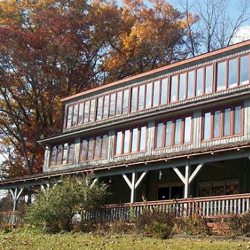
Learning Center in Fall – Photo from Archive

Wednesday, September 22 is the fall equinox, and the signs of fall are everywhere!  You may have noticed the days getting shorter, the nights getting longer, a slight chill when you step out your door in the morning, or the tinge of orange of the sassafras leaves. Fall is my favorite time in Warner Park.  Here are a few reasons why.


Fall Field – Warner Park Archives

Early fall wildflowers are one of the first signs of fall.  The fields are a riot of color.  Yellow golden rod, white wingstem, purple thistle and ironweed catch my eye.  Green grass is the perfect backdrop. 


Thistle with insects – Melissa Donahue

I am not the only one attracted to these flowers, the insects are everywhere!  How many insects can you find on this thistle?


Tennessee Warbler – Charlie Curry photography


The migration south occurs in the Fall.  The woods, creeks, and fields of Warner are a welcome stop for migratory warblers, such as this Tennessee Warbler.  The forest is filled with the sounds of these birds as they make their way south.


White-Throated Sparrow – Warner Park Archives

Fall is also the time when we welcome our winter resident birds.  This white-throated sparrow, safely in the hands of a certified bird bander, is one of the birds from Canada who winter here in Tennessee.  Listen for the song: Oh sweet Canada, Canada, Canada, and you will know this bird has returned.

Leaves – Warner Park Archives

As the days grow shorter the trees produce less chlorophyll.  This lack of chlorophyll is why the autumn leaves display their beautiful colors of yellows, oranges, reds, purples, and browns.  Visit the Nature Center campus, drive slowly along park roads, or sit on one of the benches in the park and enjoy the beauty.

Trails – Warner Park Archives

After a long hot summer, the crisp fall air welcomes me to the trails.   I hike to the music of leaves crunching under my feet.    Strike out on your own or join us for a naturalist led hike.

Click on this link to sign up for a Naturalist led hike.

https://www.nashville.gov/departments/parks/nature-centers-and-natural-areas/warner-park-nature-center


Head to Warner Park to enjoy the flowers, birds, leaves and trails, let me know if you agree that fall is the best time of year.


Wednesday, September 8, 2021

My Metamorphosis

Shared by Heather Gallagher

Naturalist, Metro Parks' Nature Centers

September 2021


If you haven't heard, after 22 years at Warner Parks, I will be moving to Beaman Park Nature Center in north Nashville. I have enjoyed my time here, made many friends and learned so much, but the time has come for me to accept new challenges. 


Me in 2020 with a White-throated Sparrow

So I began my career in Nature Centers almost 30 years ago at a little park called Steele Creek in Bristol, Tennessee. If you haven't gone, it's in the foothills of the Appalachians and boasts picnic shelters, a splash pad, baseball fields, a golf course and a State Natural Area. 

I worked there while in college, taking care of resident snakes, fish, turtles, salamanders and more on the weekends. During the week I attended East Tennessee State University, where I graduated in August 1997 with a Biology degree.


What I'm not telling you about is the train at Steele Creek. Yes, as a college graduate, I drove the kids' train on a short 1/4 loop. I presented at birthday parties and reunions, sharing my love for the Park. But I'll never forget that train.


In 1997 I was offered a Ranger/Naturalist part-time position at Bays Mountain Park in Kingsport. I provided care for snakes and turtles (yes, again!), bobcats, otters, birds of prey and, most excitingly, gray wolves. I attended "wolf school" and learned not only how to socialize with these amazing creatures but to share their awesomeness with the public. 


I started my full-time career at Warner Park Nature Center in 1999 and reported to Deb Beazley. What an impression! Deb had worked, at that time, for over 25 years at the Parks. She created most of the brochures you read today; she led hikes identifying everything from wildflowers to mushrooms to animal tracks.


The first time I was truly amazed by Deb took place on the Mossy Ridge trail. We were carrying tools down to Dripping Springs for trail work and came upon a cinder block. Really, a cinder block in the middle of the trail. So Deb hands me ALL THE TOOLS while she carries the block back up to the truck.

Really. A cinder block.


Deb counting Dalia foliosa at Hamilton Creek Park

When Dr. Seuss said "Oh The Places You'll Go," he had Deb and me in mind. We drove all over Belle Meade picking up discarded leaves in the late fall. We drove to Eaglesville once to cash in on some cedar trees a man was clearing for pasture. 


She taught me how to grow tomatoes and, when they were tall enough, how to build a cage to put around them. I helped build the Organic Garden fence, trails, and more. I drove Green Beans (an old Chevy truck we had for years) and a tiller.

Deb and I were always getting into something. 


I didn't realize until years later how invaluable the skills she shared with me were. 

  • Focus. 
  • If something's worth doin', it's worth doin' right. 
  • Measure twice and cut once, but sometimes eyeballings ok. 
  • Balance. 
  • Be level, and if you're not, dig it up and try again. 

I've also had the pleasure of working for Sandy Bivens during my tenure at Warner. I've never met someone who loves the Moon as much as she does, and I don't think I ever will. She made me notice things. Sandy shared wildflowers and birds with me. Did you know she used to lead ALL of the Saturday wildflower hikes? 


Sandy was--I mean IS--my master bander. She has been banding birds since the late 1970s, and began banding hummingbirds in 2001. So when you ask me about hummingbirds, I'll always name-drop. Because of Sandy, I am a bird bander too, and I am permitted to band hummingbirds. 

And speaking of hummingbirds, I've met some pretty incredible people who were involved in the Nature Center in other ways. 


Bob Sargent, pictured above left, was the foremost hummingbird bander in the southeast. He trained me; he trained Sandy. And when he spoke at the Nature Center about hummingbirds, he always got genuinely teary-eyed. Bob called me Slim. 

There were others:


Bob Brown and Trouble explored Warner Parks and Beaman Park with me in the early days. Bob taught me to trust my gut, and that I know the answer. 


Pat Hollyday was an incredible geologist, sharing his knowledge of fossils and rocks of the Parks with countless school children and APES labs. The Nature Center uses many of his techniques and drawings to this day. 


Curious John Sharlet worked at  the Nature Center from 1999-2006. He loved Challah, which we used to break together on Saturday mornings. He was a great astronomer and friend. 


I am looking forward to new challenges and I am thankful for the people and experiences that have prepared me for this new endeavor.  


Spring Cleaning--Preparing Your Yard for the Birds

Written by Jenna Atma, Avian Biologist and Naturalist All photos taken by Jenna Atma Spring is just around the corner, and with the weathe...