Friday, May 22, 2020

Firefly Fancy


Firefly Fancy
shared by Melissa Donahue, Naturalist 
melissa.donahue@nashville.gov
Late May 2020

The light is fading behind the hackberry tree in the backyard.  I am sitting on my back porch with a soft head on my shoulder.  Whispering quietly, we are settling down for one of my favorite early summer activities with some of my favorite people.  The day has been warm, but the night is pleasant and not muggy.  We peer into the night with great anticipation.  We, my husband and two grandchildren and I, are looking for the first firefly of the evening. 


There are 25 species of fireflies in Tennessee with Photinus pyralsis being the most familiar.  At least 19 of these species are found in the Great Smoky Mountains.  Our plan was to be camping in the Great Smoky Mountains this year.  The main attraction this time of year is the synchronized fireflies near the Elkmont campground.  This species, Photinus carolinus, is the only species in America whose individuals can synchronize their flashing light patterns. 


Fireflies (or lightning bugs) are not flies or true bugs, but a beetle in the family Lampyridae.  They take from one to two years to mature from larvae. A few days after mating the female lays her eggs on or just under the soil.  In 4 weeks, the larvae will emerge. In this larval stage, this insect lives underground for one to two winters and feeds on snails and smaller insects. They are avid hunters, injecting their prey with a paralytic substance before consuming it.  Most fireflies pupate underground or in rotting logs, although some attach to tree trunks and emerge in early spring or summer when the temperature and rainfall are just right. 


An adult firefly is about 2 cm long.  Different species eat different things: some eat nectar, other insects or nothing at all. Some species of fireflies feed on other fireflies—most notable is the genus Photuris, which mimics female flashes of Photinus, a closely related species, to attract and devour the males of that species.


Each species of firefly has a characteristic flash pattern. Called bioluminescence, it occurs when oxygen and the organic compound luciferin react together in the presence of the enzyme luciferase. This creates a “cold light” that uses 100% of the energy to produce light, and therefore no heat is produced.  This light is usually greenish-yellow but can be other colors, including one species that produces a bluish light. This allows the insects to flash.  The flashes help the male and female communicate, mark territory and warn away predators.  The males flash about every 5 seconds and the females flash about every two.  In most species, the female waits in the grass or on trees and shrubs while the male flies and flashes. When an attractive male appears, she will signal with a flash of her own.


photo credit Cosmos magazine


Just as the final light fades, we see our first flash.  Awed, we sit in a hushed quiet while flashes of lights rise up from the grass and bushes.  Then we grab our jars with holes in the lids and, laughing, head into the yard to catch our night lights.  We carefully observe the beetles, and then let them fly away and head to bed.


Wednesday, May 6, 2020

Life in the Soil

Shared by Kim Bailey
Naturalist at the Nature Center
kim.bailey@nashville.gov
Photos credit Kim Bailey unless otherwise noted

Spring is the time of year I most enjoy gardening. When the songs of migrating birds aren’t distracting me, I turn my attention to the greening trees and emerging plants and sink my hands into the soil. And being the critter lover that I am, I always look forward to the surprises that I inevitably uncover as I dig.   

Some years ago, I began to appreciate soil for what it is: a rich and varied habitat as diverse as its inhabitants. All those air spaces between the soil particles are filled with animals that range from microscopic nematodes feeding on bacteria, fungi and each other to the incredibly adaptive, shovel-pawed mole who moves through its landscape like a swimmer in water! Once I saw a mole emerge from a hole in the ground, run across the driveway, and dig a new hole in a matter of seconds. He literally disappeared before I could finish yelling “look at the mole”! I have respected the power of his front feet ever since. No photo proof of that quick encounter! 

However, over the years I have found some interesting animals that did allow me to photograph them. I have been entertained by both a crayfish and an American toad poking out of holes in the ground. 

Crayfish burrows extend deep into the soil where it is moist.

Chimneys like this are a sign that crayfish are nearby. 
Photo credit Science Photo Library via Google Images


American toads spend most of their lives on land and sometimes burrow into soil to stay moist.  

Have you ever found an obvious hole or space extending beneath the surface of the ground? I mistakenly dug this Trapdoor spider up, destroying her carefully constructed home in the process. 


Trapdoor spiders live in burrows underground. At ground level they construct a little door that is hinged with silk on one side. The door is perfectly camouflaged in the ground. The spider opens the trapdoor and waits for prey to approach.   

Lately I have come across a number of beetles.  


This June Beetle pupa began life as an egg laid in the soil. While in the grub stage, it fed on the roots of grasses and other plants. This stage lasted for three years! It pupated this spring and will soon emerge as an adult but stay underground until the following year. 


I found two different species of June Beetles (also known as June Bugs) not far from the pupa. Perhaps they recently emerged and will remain in the soil until 2021. Or are they females preparing to lay eggs? So much to learn! 

Another common encounter is the multi-legged centipede!  


Centipedes are often confused with millipedes but are unique in a number of ways. They have 1 pair of legs per segment vs. 2 pairs in millipedes.  Centipedes also have 2 “poison jaws” on their head which they use to paralyze their small prey. The round-bodied, slower-moving millipedes are detrivores and have no need for deadly mouth parts!   

Naturalist Rebecca Dandekar recently found this bark centipede tending her eggs in her garden.   

Clearly soil is not just a bunch of lifeless dirt! It is the matrix for life for thousands upon thousands of species. In fact, scientists estimate a billion organisms can be found in a teaspoon of soil.   

With that in mind, I can’t wait to get back to my garden and see what surprises await! 

Friday, April 10, 2020

Waiting for the Birds

Shared by Rachel Anderson
Naturalist at the Nature Center
rachel.anderson@nashville.gov

The first day Doug and I moved into our current home, I started a bird journal.  My first entry -- on August 31, 2001--there was a Blue-winged Warbler and a Black-throated green Warbler in a black locust tree. 

I now have nearly 20 years of observations written down – mostly about birds, but also about salamanders, wildflowers, butterflies, lichens … but mostly birds. 

My first red salamander was on Oct 14, 2001, but I didn’t find another one for 15 years! This beauty was discovered in Sept 2016, after flipping over an old railroad tie; photo by Rachel Anderson 

Some interesting patterns appear when you record phenology in one location over many years, and each spring my journal entries are particularly full of first arrivals. 


Spring after spring, Brown Thrashers arrive first, followed closely by the Blue-gray Gnatcatchers making their squeaky-chew-toy calls and the tail-pumping Louisiana Waterthrushes.  By the first week of April, these birds, plus Northern Parulas, are always present, while other species like Black-and-white Warblers and Blue-headed Vireos are sometimes seen, sometimes not. 

It’s always the male hummingbirds that arrive first at my feeders, usually two weeks before the females; photo courtesy Ronald Manley 

On the other hand, the earliest Rose-breasted Grosbeaks seen at my feeders have been females ; photo courtesy Graham Gerdeman

From my journal entries, I know any day now could mark the arrival of a solitary Scarlet Tanager in bold red and black, and one morning soon many, many Tennessee Warblers will suddenly appear, filling the air with their sharp, staccato song.   

For Indigo Buntings, we must wait until mid-April before getting a peek at their brilliant blue plumage; photo courtesy Deb Beazley 

And the familiar, rather haunting calls of the Yellow-billed Cuckoo won’t echo through my yard until May  

Flipping through my journal, I realize it’s a repeating series of appointments that I can’t wait to keep.  While all of my other social plans are put on hold and life seems suspended, my journal tells me not all of life is still right now.  Each day will bring a new, welcome and anticipated visitor to my home – all I have to do is open the door and go outside. 


Saturday, April 4, 2020

Bouquets of (Yard) Flowers

Shared by Heather Gallagher
Naturalist at the Nature Center
heather.gallagher@nashville.gov

My husband and I are the “yard people” in our neighborhood. He works tirelessly every Saturday to cut and trim our shrubs and grass to make everything perfect.  
But there is still life in the yard, and this “staycation” has given me the opportunity to find it. 
He’s allowed me to plant a few natives, such as this coral honeysuckle, with the understanding that it will attract ruby-throated hummingbirds as it comes into full bloom in early April. And we have the redbud trees flowering this time of year, covered in early spring pollinators. 
We grow coral honeysuckle on a trellis as well as over the mailbox. 


Redbud trees are native, shrubby trees that will thrive in sun or shade.

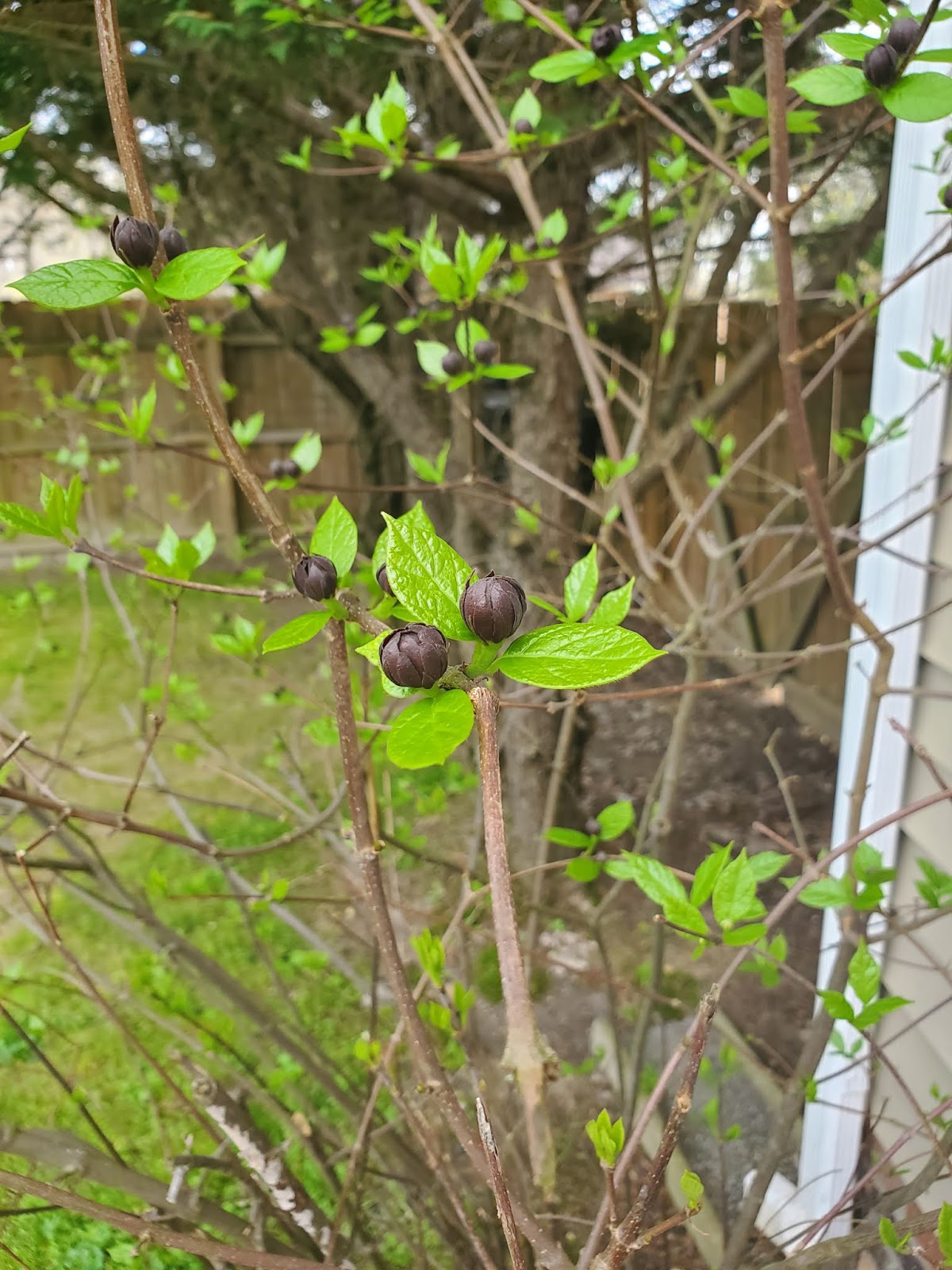
We even have a few old timey shrubs that you would expect to find in any Tennessee yard: golden forsythia and budding-out sweet shrub. We also have irises—they came with the house.  

My grandmother grew Sweet Shrub/"Sweet Bubby" in her yard.


An Iris bed is almost a staple in any southern yard!

Much to my husband's dismay, we don’t treat our yard, and, therefore, we have what he considers to be “weeds”. So what really excited me this spring was exploring closely for these weeds or what I call yard wildflowers, those that typically disappear with that first mow of the year or weed killer. 


Four-petalled bluets are very common this time of year. They prefer acidic soil, and you may even find them growing in mossy areas. The more acidic the soil, the “bluer” the bluet! 

Look closely for Four-petalled Bluets in the mossy areas of your yard.

Field pansies are related to violets, and they grow in patches everywhere! I have observed almost pure white to purple, and everything in between; their variation is incredible.  

Field Pansies paint our yard white in early spring.
Common violets can be found in the shady areas usually. These are growing beneath a cherry tree in a marshy area.  

Common Blue Violets are wonderful flowers for early spring pollinators. 

So even if you can’t get out to your favorite park, take a hike around your backyard—or your front yard for that matter. Observe the flowers of your labors through small treasures that you don’t normally get to enjoy.  

Spring Cleaning--Preparing Your Yard for the Birds

Written by Jenna Atma, Avian Biologist and Naturalist All photos taken by Jenna Atma Spring is just around the corner, and with the weathe...